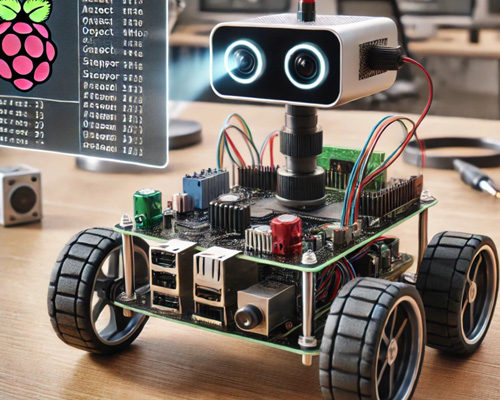
A self-driving robot platform that uses real-time computer vision and deep learning to recognize objects and interact with them.
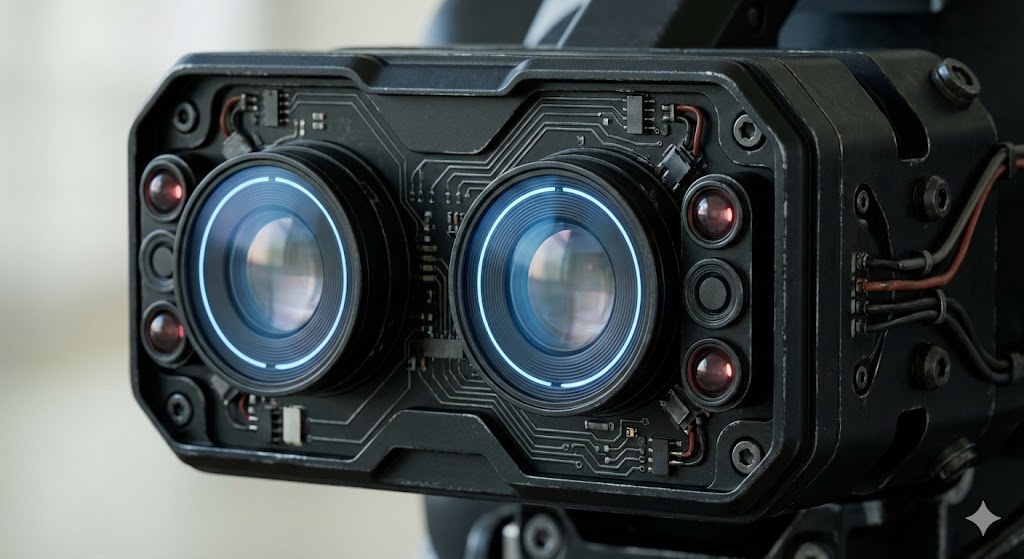
Camera array covering multiple angles, with depth sensing and infrared
An NVIDIA Jetson Nano runs the neural network inference on the device
A 6-axis servo system with PID controllers for accurate movement
A web control panel with a live video feed and telemetry dashboard
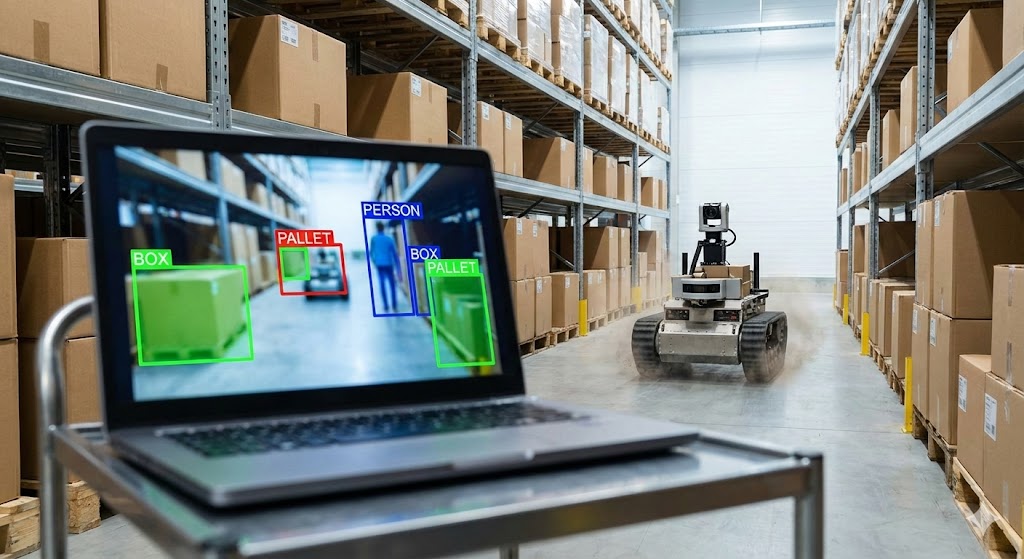
YOLOv5 detection runs at 30 FPS and identifies 15+ object classes, each shown with a bounding box.
A* and RRT algorithms let the robot navigate around obstacles on its own and re-route when conditions change.
Gripper control with force-feedback sensors for safe, accurate pick-and-place work.
On-device transfer learning lets the robot learn new objects from just a few training samples.
Stereoscopic vision and depth sensors work together to build an accurate 3D map of the surroundings.
Low-latency WebRTC streaming lets you drive the robot remotely with a keyboard, gamepad, or phone.
We designed the 3D-printed chassis and mounts in FreeCAD and ran a stress simulation to check them.
We calibrated the cameras, preprocessed the images, and trained the YOLOv5 model on a custom dataset of 5,000 images.
We integrated the servo motors and used inverse kinematics for smooth 6-DOF arm movement and locomotion.
The ROS2 framework connects the vision, planning, and control nodes and passes messages between them in real time.
We tested in controlled settings, step by step, with navigation and detection tasks that grew harder over time.
From self-driving navigation to computer vision, our team builds custom robots that solve real problems.